
Getting started · Multiplayer guide
How to Play Halloween: The Game
Learn how to play Halloween: The Game: rescue residents and escape as a Civilian, hunt as Michael Myers, call police, and use spectator skill checks.
Your first match
One town. Two ways to play.
Learn the match basics, then jump to the steps for your role.
Quick Answer
Play Halloween: The Game as Michael Myers or one of four Civilians in 1v4 multiplayer. As a Civilian, find and warn NPC residents, gather escape items, call police, and help residents and yourself escape. As Michael, locate, stalk, and kill residents and player-controlled Civilians, including your marked Special Targets.
Civilians can also work with police to detain Michael; he cannot be killed. If your Civilian dies, stay in the match: you can support the team and may return as a Sheriff's Deputy or Dr. Loomis. The separate singleplayer Story Mode follows Michael.
How to Play Each Role
Multiplayer pits one Michael against four Civilian players. NPC residents populate the map: Civilians try to save them, while Michael hunts them. Michael cannot be killed, but police-backed detention can stop him. As a Civilian, focus on saving residents, calling for help, and preparing an escape.

Playing as Michael Myers
- Use Killer Sense and Stalk to locate residents and identify worthwhile targets.
- Prioritize NPC residents and your marked Special Targets instead of chasing one fast player across the map.
- Turn off lights or damage power boxes to create dark routes for Shape Jump.
- Use Shape Jump to reposition unseen, then leave it where darkness and line of sight allow.
- Watch your Bloodthirst meter and selected ability indicators before committing to difficult groups or defended escapes.
- Keep checking active objectives. A noisy escape sequence tells you where the Civilian team is committing resources.
Playing as a Civilian
- Search nearby buildings for residents, phones, tools, defensive items, and possible escape components.
- Warn residents about Michael. Depending on the conversation result, residents can hide, follow you, or help call police.
- Divide the work: one player can escort residents while others scout, activate escapes, or protect the group.
- Call police from a working phone and continue helping residents; do not stand beside the phone waiting for the match to resolve.
- Match items to the randomized escapes you find. Starting an escape creates noise and can reveal your position to Michael.
- If you die, stay to spectate, complete the available prompts, use support cards, and watch for a reinforcement opportunity.
For first-match priorities, use the beginner guide. For focused instructions, use the dedicated police call guide, escape guide, and police respawn guide.
Objectives, Escapes and Winning
The Civilian goal is to save residents and survive; Michael aims to eliminate the town's residents. Police-backed detention is another way to stop him. The official overview describes these objectives but does not publish a complete victory-scoring formula or a fixed rescue quota. Patch 1.0.1 adjusted end-of-match scoring, so these goals should not be read as guaranteed numerical win thresholds.
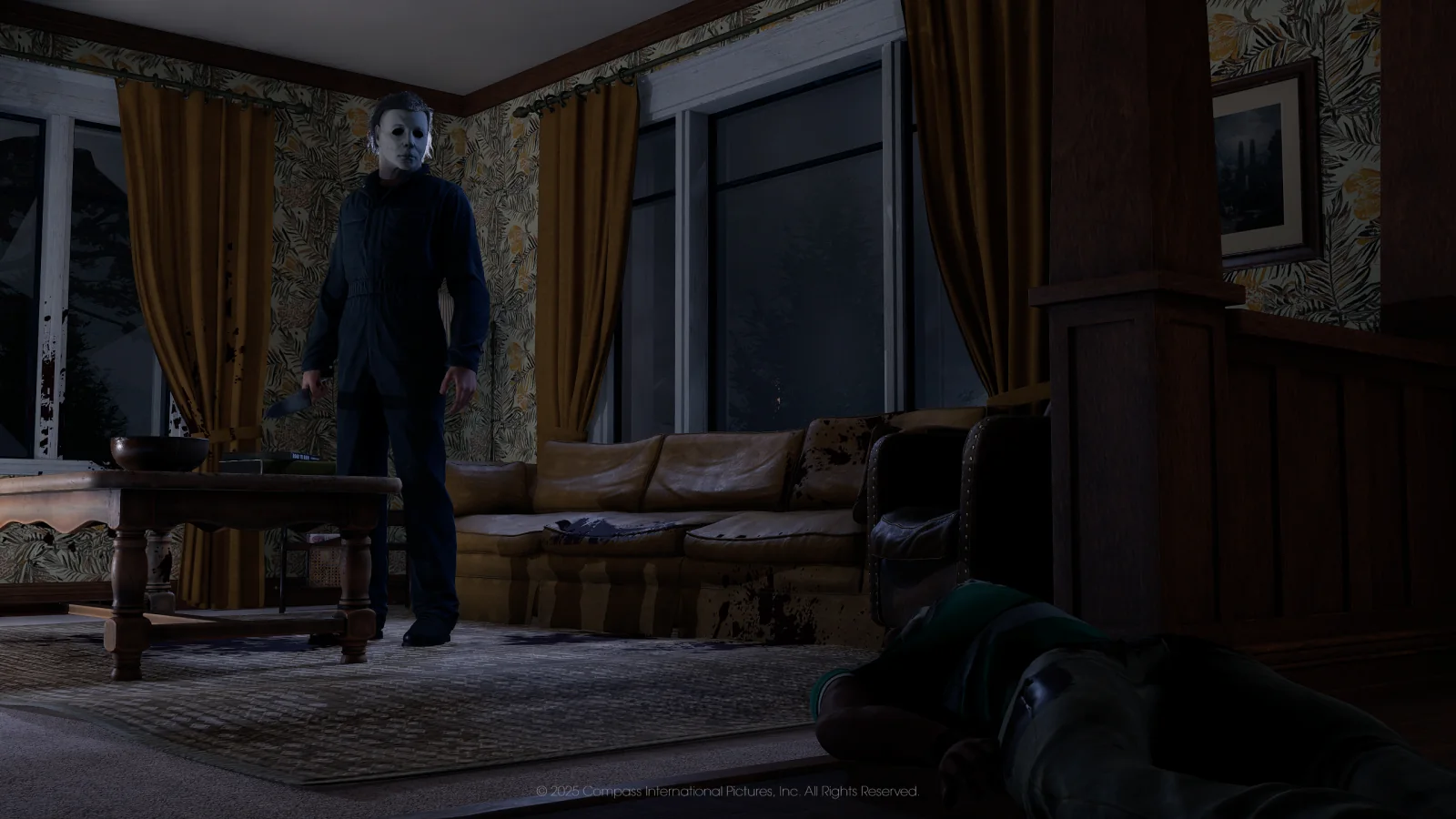
Residents are part of the objective
The four Civilians are not the only potential victims. NPC residents populate the map, and the official multiplayer overview describes rescuing them as a central Civilian responsibility. Warn them before trying to escort them: an unaware resident may ignore danger, while a warned resident can respond to requests.
For Michael, residents are valid targets and often more important than an extended chase with a player. Special Targets are specific marked victims: killing one before its timer expires is worth more than an ordinary resident kill, so keep them inside your route rather than pursuing a single player across the map. For Civilians, every resident found, warned, hidden, or moved toward an exit changes the town-wide contest.
Patch 1.0.1 improved resident pathing into escapes and police NPC pathing. Install the current update before treating a pathing failure as the intended mechanic.
Police escalate the match
Working telephones let Civilians involve the authorities. Resident conversations can also create additional police calls. Police add pressure and manpower but do not make Michael killable; the official objective is to detain him and send him back to Smith's Grove.
Michael can disrupt the town before or after police arrive. Civilians should treat police as help, not as a reason to stop rescuing residents or preparing an escape.
Escape objectives change between matches
Possible exits and their required items are randomized. Search points of interest rather than memorizing one fixed route. Activating an escape creates enough noise to alert Michael to its location.
That noise makes timing important. Gather the required items and nearby residents before committing when possible, then be ready to defend or redirect if Michael responds. See how to escape for the current evidence on escape types and player-observed steps.
Michael Myers: Stalk and Shape Jump
Killer Sense gives Michael a first-person view of nearby potential victims. Watching a target builds that individual's Stalk, improving tracking and execution opportunities. Shape Jump lets Michael move unseen at increased speed, with Shape Dash providing a forward burst. Create darkness by switching off lights or cutting power, and break line of sight before relying on entry or exit.
The official articles describe light and observation restrictions differently; seeking darkness and cover is practical guidance, not a complete activation rule. Use the current ability indicators for availability. See Michael Myers abilities and tactics for loadouts, Bloodthirst and the unverified numeric cooldowns.
Death, Skill Checks and Police Reinforcements
IllFonic confirms that defeated Civilians can support teammates and may return as a Sheriff's Deputy or Dr. Loomis. Community reports call the timed spectator prompts “skill checks” and connect successful prompts with support cards and police return opportunities.
Follow the current spectator instructions and inspect the cards you receive. A return is not guaranteed, and exact prompt timings and card odds are not officially published. See how skill checks work and how to respawn as police for the evidence and focused instructions.
Maps and Changing Objectives
The four launch multiplayer maps are East Haddonfield, Haddonfield Heights, Orange Grove Estates and Haddonfield Town Center. Points of interest can reveal residents, loot, phones, hiding places and escapes, but escape locations and required items change between matches. Learn landmarks without assuming a fixed item spawn or exit recipe; use the map directory and landmarks for each neighborhood.
Story Mode and Beginner Priorities
The six-chapter singleplayer Story Mode follows Michael and teaches his basic movement and hunting systems through campaign objectives. Optional challenges, collectibles and difficulty settings add replay goals and unlock cosmetics. It is useful practice for Michael, but it does not teach the full Civilian rescue loop. Start there for Michael, then use the beginner guide for your first multiplayer matches.
Beginner Mistakes
- Michael chases one player for too long. Players can keep you away from residents and Special Targets. Break off and pressure the town objective.
- Michael tries to Shape Jump in light or while watched. Create darkness and break line of sight before relying on the ability.
- Civilians rush an exit alone. Warn and gather residents first when the situation allows; personal escape is only part of the team objective.
- Everyone searches the same house. Spread out enough to cover phones, residents, and escape items, but keep a route back to teammates.
- Players ignore noise. Flashlights, combat, and activated exits can reveal activity. Move after making a loud commitment.
- A dead Civilian leaves immediately. Staying enables spectator support and a possible Sheriff's Deputy or Dr. Loomis return.
- Players rely on old launch behavior. Patch 1.0.1 changed crossplay party handling and NPC pathing; current on-screen behavior takes priority over early reports.
Common Questions
How many players are in a Halloween: The Game match?
Multiplayer is 1v4: one Michael Myers against four Civilian players. NPC residents also fill the map, but they are the objective both sides are fighting over rather than extra human players.
What is the difference between playing Michael Myers and a Civilian?
They are the two playable sides of the same 1v4 match. One player controls Michael, who stalks and eliminates residents, while the Civilian players work together to warn and rescue residents, call for help, and reach an escape. Official sources describe both as playable roles but do not document a queue or side-selection system, so treat the role you receive in a match as the one to learn from.
Can Michael Myers be killed?
No. Official material describes Michael as unkillable; Civilians can slow, stun, or knock him down and combine that with police support to detain him. The Michael Myers guide covers the current ability and combat context.
What should I do after my Civilian dies?
Stay in the match. Defeated Civilians can complete spectator prompts to support the team and may return as a Sheriff's Deputy or Dr. Loomis. See how spectator skill checks work and how to respawn as police for the step-by-step flow.
Related Guides
- Story Challenges and chapter guides
- Perk Cards and decks
- Halloween: The Game beginner guide
- Michael Myers abilities, cooldowns, and tactics
- How to call the police
- How to respawn as police
- How spectator skill checks work
- How to escape
- How challenges, XP, and Perk Points work
- Characters and Civilian roster
- Crossplay status
Current Patch Context
As checked October 6, 2026, Patch 1.1.0 is the latest patch listed on the official news index. It reduces escape-item spawns and Storm Cellar and Gate capacity, increases Fuse spawns, increases Civilian sprint stamina consumption, lets respawned officers interact with Residents, and adds PC performance and Series S stability work. The preceding 1.0.4 and 1.0.3 changes remain history. Follow the Patch 1.1.0 summary and patch tracker before applying older combat or escape advice. This is official patch context, not a current-build hands-on benchmark.
Sources checked
Official Multiplayer Gameplay Overview, Story Mode overview, launch map overview, stealth overview, Patch 1.0.1, Patch 1.0.4, and the news index rechecked October 2, 2026. Spectator skill-check and card details remain community reports attributed in the linked mechanic guides; exact odds, timings and victory thresholds are not independently verified in-game.